
Fluorescence Measurement With Spectrometers
Fluorescence is a high-sensitivity technique in which molecules typically absorb a lower wavelength of incident light from one direction and emit a higher wavelength of light in all directions. With a known incident light wavelength, samples can be identified by their fluorescent emission spectra.
Use Ocean Optics Spectrometers for Fluorescence Applications

Advantages
- High sensitivity – detection to single-molecule concentration levels
- Non-destructive – critical with small volume samples
- Quantitative results – ideal for reaction and process monitoring

Applications
- Analysis of rare earth salts
- Authentication of currency and documents, foods and fuels, and gemstones and luxury goods
- Clinical diagnostics for cancer detection, tissue health and vision screening
Fluorescence Measurement Setup
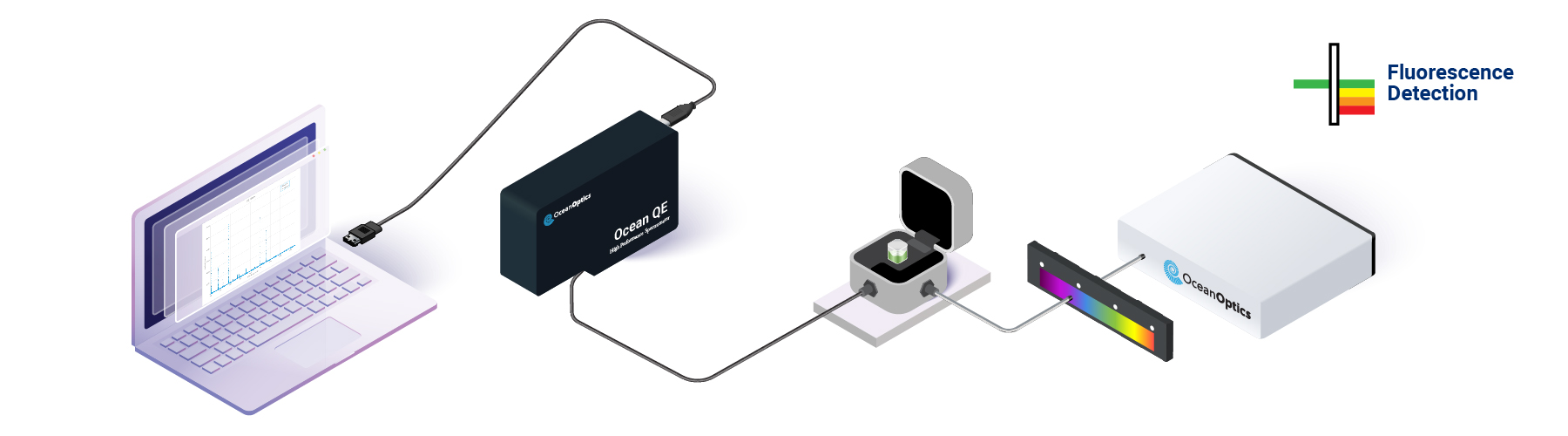
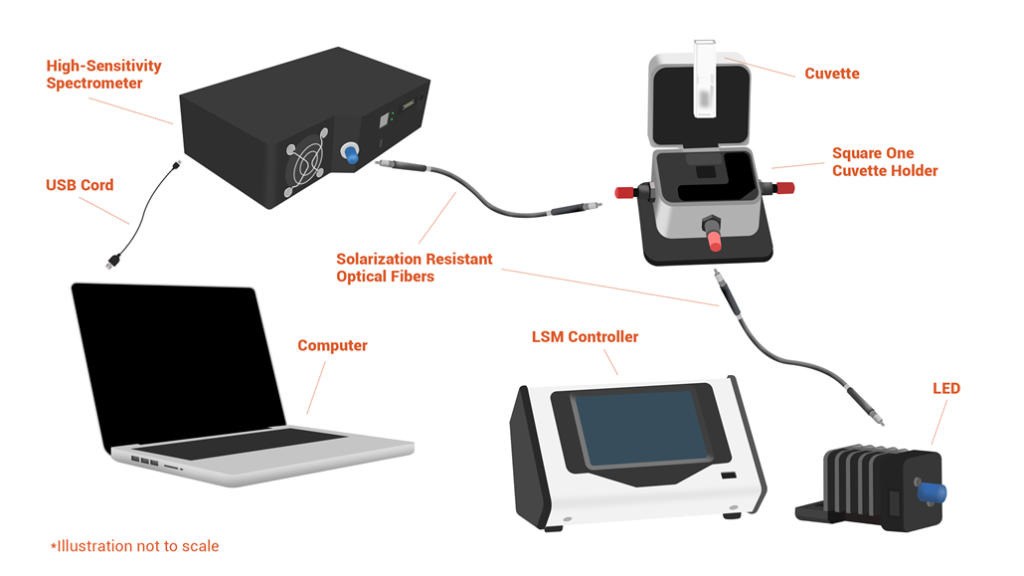
Here’s an example fluorescence system that uses a cuvette holder for sampling. To complete the system, you’ll need the spectrometer, an excitation source, optical fibers, and filters to block excitation energy. Multiple configurations are possible.
Fluorescence Resources
Access specialized data, technical guidance, and related articles for your measurement techniques.
- Tech Tips
- Phosphorescence Analysis